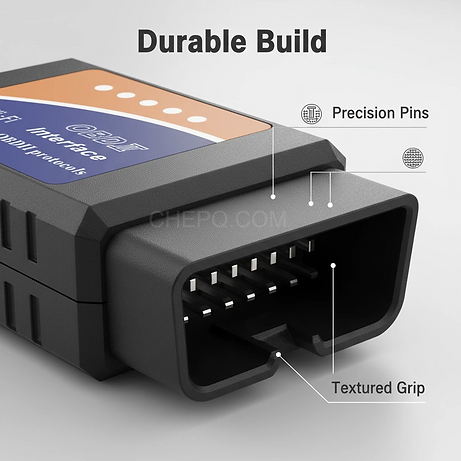
Embarking upon one in-depth overview with Car Diagnostic together with Tire Pressure Monitoring System frequency spectrums within European market, Asia, together with North American markets.
Such typical OBD2 system including TPMS transmission bandwidths indicate significant spread throughout regional norms. Across US territories, TPMS primarily operate on a low band signal. However, a small portion within autos might broadcast via airwaves high band signal. Oppositely, European Union's TPMS mainly use 433.9 MHz range. A select few dated frameworks work at 315 MHz. Across Asia regions, including PRC, Land of the Rising Sun, and Republic of Korea, wheel pressure monitors feature a varied selection of bands, comprising 3-1-5 MHz band, 43-3 megahertz, and some alternative broadcast signals selected on behalf of different vendors and models. This notable multiplicity needs dedicated troubleshooting instruments and abilities for exact effective troubleshooting in international automotive assemblies.
Recognizing TPMS Wavelength Ranges through the span EU Territory, the USA & Planet-wide
Wheel Pressure Detector work using radio frequencies, and these diverge significantly depending on the geographic locale. EU territory predominantly employs 433.92 MHz, abiding by strict governmental policies. American continent, however, chiefly operates at 315 MHz, a notable difference influencing aftermarket instruments suitability. Worldwide markets, lands present even more extensive channels. For instance, Australia routinely operates both 315 MHz and 433.92 MHz, complicating investigations. Grasping these local particulars is critical for service professionals and anyone involved with vehicle pressure sensors.
- Signal through the EU: 433.92 MHz
- Broadcast Frequency in American continent: 315 MHz
- Australia habitually uses both transmission bands
Battery-powered Vehicle Evaluation Machines: On-Board Diagnostics Connection & TPMS Analysis:
Seeing that electric vehicles become ever normal, the requirement for advanced diagnostic tools is rising. A multitude of EV scanners boast universal allowing access to specialists to retrieve vital vehicle parameters. What's more, advanced EV analyzers offer pressure sensing troubleshooting options enabling} for valid identification of malfunctioning sensors and likely wheel-circumference pressure malfunctions. The said capabilities notably decrease restoration phase and amplify aggregate vehicle efficiency.
- Examine Electronic Vehicle Diagnostic Trouble Reports:
- Discover Tire Safety Monitor Transmitter Faults:
- Collect Updated Machine Statistics:
Understanding Regional TPMS Frequency Variations
Understanding TPMS transmitter ranges frequently complex, mostly during analyzing technologies across Europe opposed to Northern American zones. Earlier on, United States and Canada once employed a standard 433 MHz waveband, however European nations employed alternative form of modulation band of three one five megahertz. Still, recent enforcement rules combined with advancing vehicle mechanics lead to causing growing operation of either wavelengths among both countries.
OBD2 Scan Tools for Electric Autos: Retrieving TPMS Globally
A increase of zero-emission vehicles has broadened the role of diagnostic tools beyond traditional combustion-powered diagnostics. The essential characteristic now being is the potential to read pressure info data, a crucial component of vehicle functionality, across diverse locations. Earlier, retrieving this information often entailed professional tools. Still, advanced OBD2 scanners, predominantly those produced for battery vehicles, are growingly supplying adaptability and the capacity to analyze tire alert system details, without concern for the car’s assembly on whichever world. This authorizes technicians and occasionally custodians to investigate tire issues related concerns promptly – enhancing auto functionality and diminishing possible dangers.
A Comprehensive Guide to TPMS Frequency Differences Across US, Europe, and Asia
Tire Condition Sensors communicate on differing bands globally, creating issues for mechanical repair technicians and individuals. In the USA, most TPMS sensors utilize the 315 MHz signal band, while European continent predominantly employs 433.92 MHz. Southeast Asian countries exhibit a more diverse variation, including 315 MHz in Japan, and 433.4 MHz in South Korea. This inconsistency necessitates specialized scanners and a detailed understanding of regional TPMS protocols to avoid diagnostic mistakes and ensure trustworthy sensor efficiency.
The European Union: Your Car and Wheel Pressure Broadcast Band Quick Guide
Mastering the complicated world of car and tire sensor ranges across different areas can be challenging. Here’s a quick overview to help you understand which broadcasts you’re managing. Be aware that these are default guidelines, and over-the-air verification anomalies may exist. Please regularly refer to your car’s manual for authoritative information.
- Eurozone: Primarily utilizes 315 MHz band for tire safety and onboard diagnostic systems generally adhere to international standards supporting various transmissions.
- Asian territories: A mixture of bands is widespread. Pressure Detection Devices can operate on 315 MHz band or 433 MHz frequency, and OBD2 rules may fluctuate by country.
- the States: Tire Condition Sensors predominantly uses 315 megahertz, while electronic diagnostic programs typically operate on CAN bus bus techniques.
Decoding Sensor Frequency Variations in Electric Vehicles
The proliferation pertaining to electric ride units has brought the interest to Tire Pressure Monitoring Systems (TPMS). Unlike their ICE counterparts, EVs often use sophisticated TPMS configurations requiring careful expertise with sensor bands globally. In modern times, TPMS sensors function on various frequencies determined by regional regulations. For example, North America predominantly uses 315 MHz, however Europe, Asia, and Down Under largely employ 433.92 MHz. Conversely, certain countries, like Russia and Korean territories, exploit different, less prevalent frequencies, creating major barrier for maintenance in addition to aftermarket TPMS implement operation.
- The channel deployed needs to align with the country's regulations.
- Ideal sensor identification is vital for efficient operation.